
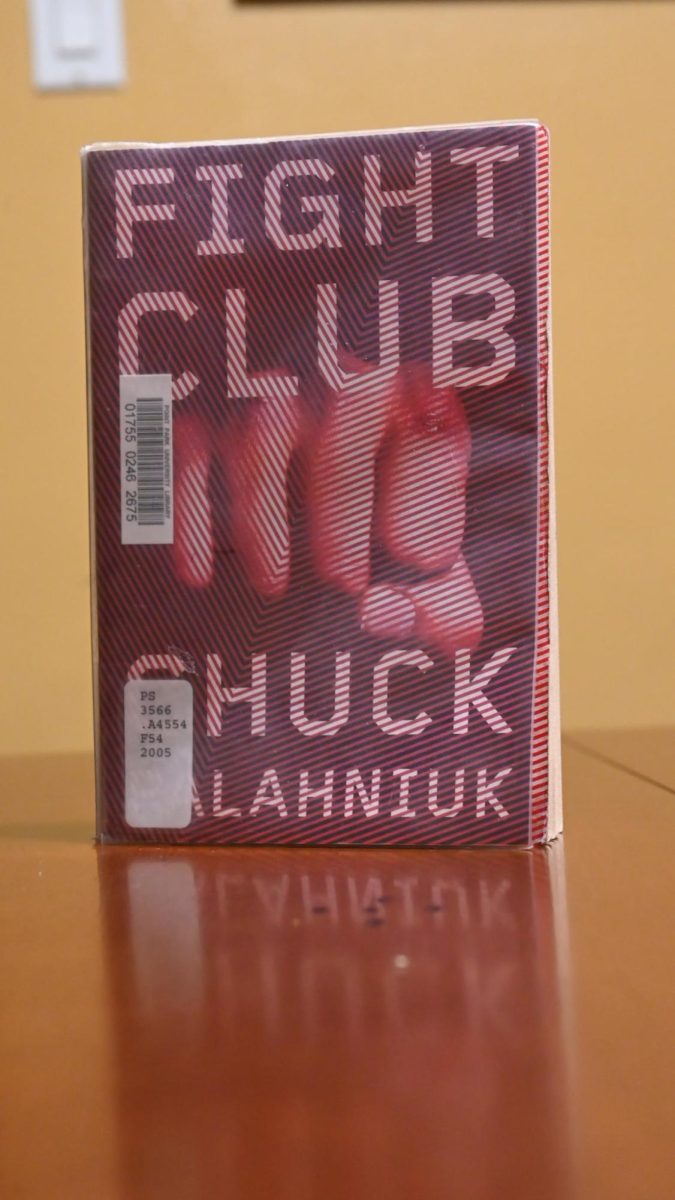
Fight Club is a 1996 novel written by Chuck Palahniuk about a protagonist who is never given a name. He lives a fairly cushy life but suffers from insomnia and dissatisfaction with his life.
Eventually, he meets a man named Tyler Durden, and together they start an underground fight club where men who are similarly dissatisfied with life fight each other for fun.
As the book continues, increasingly absurd and darkly violent events occur, which all lead to a big twist near the end of the novel about the nature of the protagonist’s and Durden’s relationship.
If you don’t already know the big twist of Fight Club, I won’t spoil it here. I would encourage anyone who is not aware of the twist but thinks the premise sounds interesting to track down a copy of Palahniuk’s novel or the revered film adaptation by director David Fincher immediately.
In retrospect, the twist is extremely obvious, and Palahniuk is not shy about dropping massive hints throughout the novel, but rereads still provide value in seeing how he was able to hide the twist in plain sight.
The element of the book that surprised me the most was humor. Many dark and crude jokes relating to the people, objects, and society told by the protagonists are all over the novel.
At one point in the novel, the narrator and Durden decide to take up a job serving food at a fancy restaurant, and they go out of their way to ruin the food by urinating it.
I found this quite amusing, but I know many will find it too juvenile. If gross-out and weird jokes are not your cup of tea, this book is likely not for you, but if they are to your taste, this book has them in spades.
The book is told from the point of view of the protagonist, who infects the books with a sense of detachment and cynical irony.
He views society as less than himself and seeks to destroy it. These beliefs also characterize his companion Tyler Durden to an even greater degree.
Durden is also smart, witty, and more willing to commit acts of violence than the protagonist. Durden and the protagonist’s relationship with the heart and highlight of the book for me.
Many of the chapters begin with a disorientating fast-forward, only for the narrator to flash back so that the audience can be caught up on how the opening events of the chapter connect to the previous one.
The partially non-linear structure of the book reflects The Narrator’s insomnia and detachment from reality. The chapters themselves are short, and my copy of the book clocks in at 208 pages, so it should not take anyone too long to read.
If I had to levy criticism at the novel, it is that I wish it would have spent more time with the individual members of the fight club. We get a glimpse of the overall structure and attitude that the members take, but I wish that greater care and page space were given to the members’ specific personalities and reasons for joining the organization.
Anyone interested in a fast paced, absurd and comedic crime thriller with 90s cynicism will find the book to their taste.