


Imagine waking up to living in a town where it’s a privilege to pee. You must sacrifice your final wages just to use the restroom. Peeing for free, or in public, is reason for exile.
This is a day in the life of the dystopian “Urinetown.” There is a severe water drought in this town, kicking off an onslaught of chaos.
When a big corporation, “Urine Good Company,” monopolizes public amenity fees for their own financial gain, the poverty-racked citizens of this town must abide by the unfair taxation or risk being taken away to the fabled city “Urinetown” – the likes of which no one really knows.
Narrated by the humorous Officer Lockstock (Leandro Bilello), the story follows the main character, Bobby Strong (Marshall Benton), who begins to doubt the corporation’s promises of permanent solutions to the drought after his father is taken to Urinetown by police.
As taxes rise to benefit the recreation of the rich, the plot thickens. Bobby Strong stokes the inspiring flame of rebellion with Hope Cladwell (Andrea Paulina Robles), the daughter of Urine Good Company’s owner: Caldwell B. Cladwell (Ben Allen Carter).
The public loses trust in the company which has promised them solutions, the law fails them, and everything within the community goes awry.
It’s not possible to water down “Urinetown” into a simple synopsis of just a few themes and aspects. The concept of the musical seems awkward and outlandish. You walk into the show and realize, “Wait, this musical is really about pee?”
Going into the show, it was easy to wonder what substance a musical like “Urinetown” could really have. However, it seemed to have a way of conveying underlying truths beneath the caricature that it appeared to be.
Andrea Paulina Robles, who plays Hope Cladwell, commented on the show’s message.
“What I love most about ‘Urinetown’ is how completely unhinged it is while still saying something real,” Robles said. “The humor is ridiculous in the best way, but underneath it are themes that feel incredibly relevant right now.”
While the musical is about the costly fees of using public toilets, the musical also uses satire to criticize authority — from police brutality and capitalism to musical theatre itself.
“Urinetown” is both political and satirical, leaving the audience to question how the gradual collapse of their dystopian society aligns with our own.
The Pittsburgh Playhouse’s portrayal of “Urinetown,” directed by Benjamin Viertel, was entirely entertaining — with scenes throughout the theatre (besides just the stage) keeping you in the narrative.
Unique costuming emphasized the distinct gap between the rich and the poor. From the audience’s perspective, it’s almost like you’re witnessing the tragedy firsthand.
From serious social critique to hilarious lines and scenes within the show, “Urinetown” is extremely attention grabbing.
The final act’s satirical commentary on the price of freedom was enlightening to see on stage.
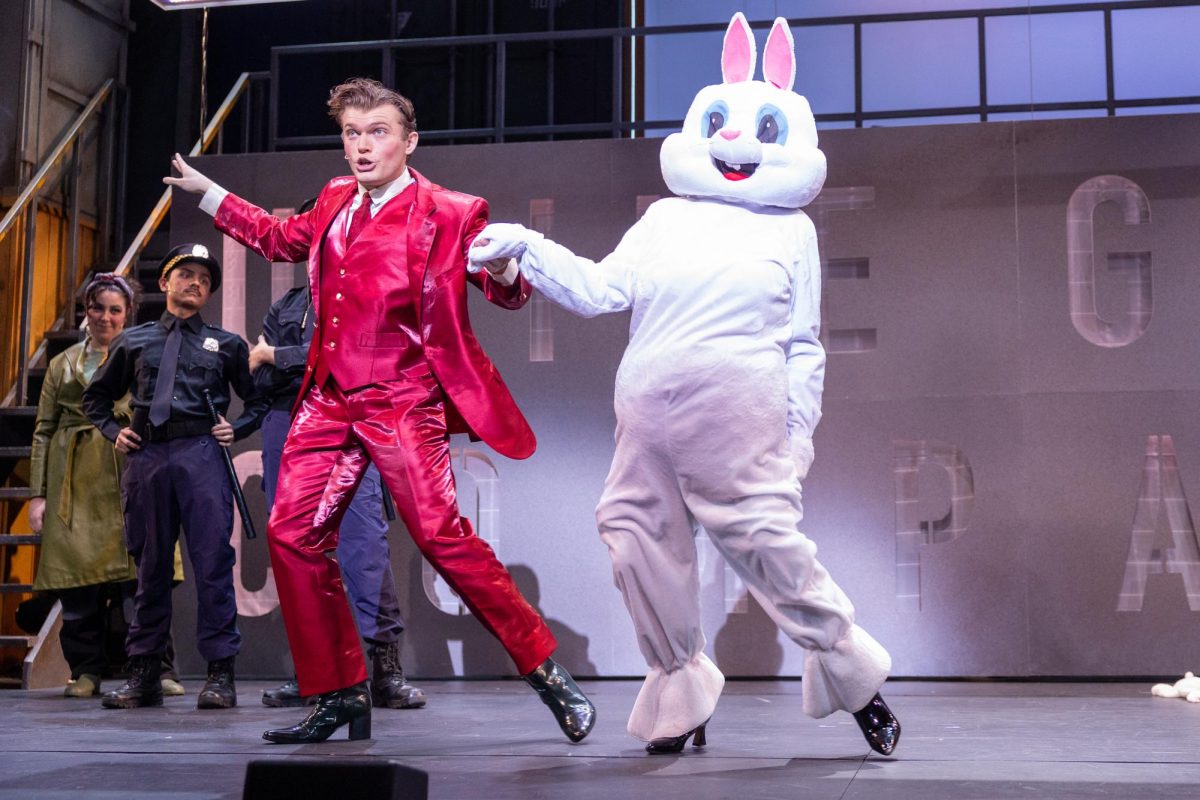
The song performances were done with the perfect amount of satirical wit on part of the vocal and theatrical performances. One performance that particularly stood out was that of “Don’t Be the Bunny,” sung by Cladwell to his daughter, where a giant bunny comes out and starts dancing and singing with Hope, Cladwell and the ensemble.
Another memorable one has to be “I See A River,” which is made to feel simultaneously liberating and damning for the citizens as they wonder what is to come.
The scene in the song where Hope is now leading the poor citizens to “freedom” and they recreate the famous “Washington Crossing the Delaware” painting was funny as well.
What was so interesting about the musical is how it conveyed tragedy, corruption and abuse of power.
“Urinetown is a rather tragic tale as a whole and why it’s important to look towards something important like ‘love,’” said Luka DePasquale, who plays Senator Fipp.
This musical tells a complex story through humor and satire. Marshall Benton, actor of the lead Bobby Strong, commented on the show’s message, saying, “The sad part about the show is that nothing really works in a situation like this, because it was already too late to fix.”
“Urinetown” was loved by audiences and performers alike.
“Being part of this production has truly meant a lot to me,” said Robles, “I hope audiences feel the heart we put into it and leave both entertained and thinking a little deeper about the world we share.”
“I loved being able to be as silly and wacky as possible on stage and getting to do it with all my friends,” said Charlotte Jensen, actress of Little Sally. “We also had the best director, Ben Viertel, who gave us a lot of freedom and let us play around, while still being able to create structure and teach us so much.”
“They executed the balance between comedy and social commentary very well,” said first-year dance major Shay LaVelle.
“Urinetown” was a captivating balance of substance, humor and great songs done by Point Park’s students and show contributors.